One Prompt to Agent Transactions
Introducing the Autonomous Radius Testnet Faucet
Starting today, agents can autonomously onboard, fund, and transact on the Radius Testnet. Building payment workflows that disappear into the background is critical to enabling machine-to-machine payments at scale.
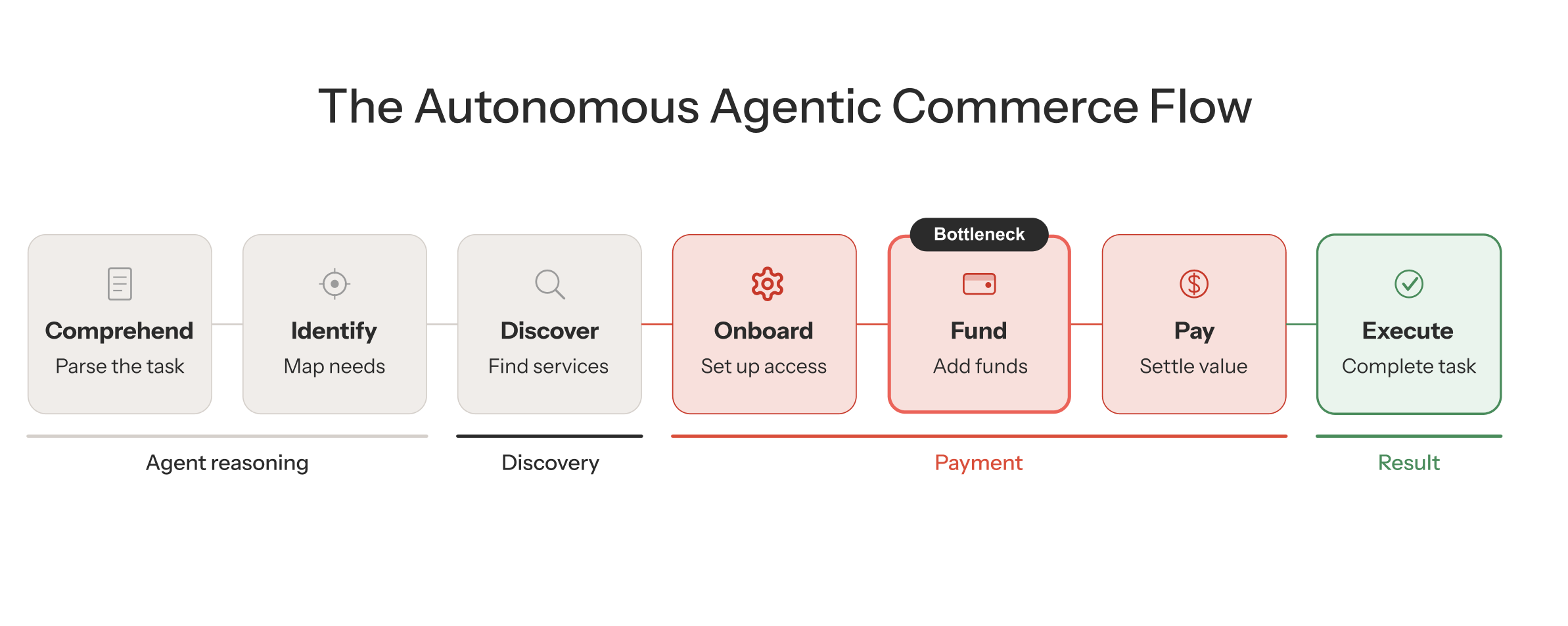
The vision behind agentic commerce and machine-to-machine payments, where agents pay for API calls, crawl paywalled content, or stream micropayments to other agents, depends on a workflow that is fully navigable by agents themselves. Every step of that flow needs to be optimized for autonomous handling by agents. The moment a human has to step in, to fund a wallet, configure credentials, or navigate a faucet UI, the loop breaks.
To date, setting up and funding a wallet has been a bottleneck to developing these end-to-end workflows. The Radius Testnet autonomous faucet solves for this step. When paired with Project NANDA's agent identify and discovery layer (more on that below), we're getting closer to fully autonomous workflows.
The Radius Testnet Autonomous Faucet
On Radius testnet today, a single prompt in any agentic IDE handles the full onboarding flow:
Read https://docs.radiustech.xyz/skills/dripping-faucet.md and fund a local walletThe agent reads the skill doc, generates a wallet, calls the faucet, handles edge cases, and verifies the on-chain balance. Funded wallet in seconds, no human in the loop.
Under the hood, the happy path is three calls:
# 1. Generate wallet
WALLET_OUT=$(cast wallet new 2>&1)
ADDRESS=$(echo "$WALLET_OUT" | awk '/^Address:/{print $NF}')
echo "Wallet: $ADDRESS"

# 2. Fund via faucet
DRIP=$(curl -s -X POST "https://testnet.radiustech.xyz/api/v1/faucet/drip" \
  -H "Content-Type: application/json" \
  -d "{\"address\": \"$ADDRESS\", \"token\": \"SBC\"}")
echo "TX: $(echo "$DRIP" | jq -r '.tx_hash')"

# 3. Verify balance
BALANCE_RAW=$(cast call 0x33ad9e4BD16B69B5BFdED37D8B5D9fF9aba014Fb \
  "balanceOf(address)(uint256)" "$ADDRESS" \
  --rpc-url https://rpc.testnet.radiustech.xyz)
echo "SBC balance: $(echo "$BALANCE_RAW" | awk '{printf "%.6f", $1/1000000}') SBC"
The full skill doc includes signature challenge handling, rate limit retries, and a structured evaluator-optimizer loop. From here, agents can send stablecoin payments, integrate pay-per-request flows, and settle micropayments at sub-cent price points on a network with sub-500ms finality and $0.0001/tx fees.
To add Radius skills in Claude Code:
/plugin marketplace add https://github.com/radiustechsystems/skills.gitAnd to add Radius skills to other agents:
npx skills add radiustechsystems/skillsComing Soon: Bridging the Discovery Gap
A seamless onboarding flow solves what happens after an agent knows where to go. Agents still need a way to programmatically discover services, verify trust, and evaluate capabilities on their own.
Project NANDA, an MIT Media Lab initiative, is building this layer. NANDA's Index is a global agent registry, (e.g., DNS for agents) where services publish machine-readable "AgentFacts" (capabilities, auth keys, pricing) and become discoverable to any agent in the ecosystem. Their NEST testbed provides the environment for deploying and testing network-native agents across MCP, A2A, and HTTPS.
Payment capabilities on NEST are currently supported by Radius. More to come on this collaboration in the coming weeks.
Get Started
- Radius docs: docs.radiustech.xyz
- Radius testnet explorer: testnet.radiustech.xyz
- NANDA NEST: nest.projectnanda.org
Radius launched mainnet on March 5, 2026. If you're building agents that need to pay or get paid, reach out.
Build on Radius
Get in touch with our team to discuss your next project.